 Skip to content

Air Duct Cleaning, Repair and Dryer Vent Services
Keeping your ducts minty fresh. Our certified, insured technicians inspect the whole system, remove the dust and debris your vents keep blowing out, fix leaking ductwork and clear clogged dryer vents, with a clear price before any work begins.
- Certified & insured technicians
- Upfront pricing, no add-ons
- Service 7 days a week
- Homes & businesses
Duct Specialists, Not a General Contractor
Air ducts sit out of sight inside walls, ceilings, attics and crawl spaces, so they are easy to forget. Over time dust, pollen, pet dander and construction debris build up inside them and blow back into your rooms every time the heating or cooling runs.
Mint Air Duct Cleaning works on the air distribution system itself: cleaning, repairing, sealing and installing air ducts and dryer vents for homes and businesses. Every visit starts with an inspection from the supply vents to the air handler, so the work matches what your system actually needs.
Our Professional Air Duct and Dryer Vent Services
Residential Air Duct Cleaning
A home heating and cooling system is a web of short branch runs, one or more per room, feeding off a main trunk. A quick clean of the trunk misses the runs that end in your bedrooms, so we open and clean each accessible supply register and return grille in the house, including bathrooms, hallways and finished basements, then clean the trunk and the blower area they all connect to.
Houses, condos, townhouses and apartments are handled the same way; what changes is access. In an apartment or condo we work from inside the unit and plan around the building’s rules on noise, elevators and working hours. In a house, the attic, basement or crawl space decides how we reach the trunk.
- Single-family homes
- Condos & apartments
- Townhouses
- Post-renovation dust
- Pet dander & allergens
- Floor & furniture protection
Commercial Air Duct Cleaning
Commercial systems move far more air than a house, through larger trunks, longer runs and more diffusers, so they load up faster and spread what they carry to more people. Dust on desks, streaks on ceiling tiles and complaints about stuffy rooms are often the first sign that the ductwork needs attention.
Our certified, licensed and insured technicians clean supply and return ductwork, ceiling diffusers, return grilles and the air handler compartment with agitation tools and HEPA extraction. The same inspection-first approach we use in homes applies, scaled to the building: we look at the air handlers, the trunks and a sample of diffusers before quoting.
- Offices
- Retail spaces
- Multi-unit buildings
- Property managers
- Scheduled around business hours
- Large trunk systems
Air Duct Sanitizing
Air duct sanitizing is the application of an EPA-registered antimicrobial product to the inside of the duct system after the ducts have been cleaned. It is a follow-up step, not a substitute for cleaning: the dust, debris and buildup come out first with agitation tools and HEPA extraction, and the treatment goes only onto clean surfaces that its label allows.
It is not automatically part of every duct cleaning. According to the U.S. EPA, a product must be registered for the specific use shown on its label, it should be applied only after the system is cleaned of visible dust and debris, and no biocides are currently registered for ducts lined with fiberglass or made of fiberglass duct board. That is why we look at the duct material and the condition first.
Air Duct Repair & Replacement
Mint Air Duct Cleaning provides comprehensive residential and commercial air duct repair and replacement services for damaged, leaking, disconnected, deteriorated, or poorly performing ductwork. Rather than recommending unnecessary full-system replacement, our insured HVAC technicians assess existing duct networks to identify structural damage, air leaks, and airflow problems. We recommend practical repair or replacement solutions based on duct condition to improve air distribution and indoor comfort.
Air duct damage often begins with holes, cracks, loose connections, or poorly sealed joints that allow heated or cooled air to escape before reaching individual rooms. Over time, aging materials, moisture exposure, and physical damage can worsen these problems. To address these issues, our insured HVAC technicians inspect accessible duct sections, locate leaks, and reconnect separated components. When the existing ductwork cannot be reliably repaired, we recommend replacing the affected sections.
- Leaking ducts
- Disconnected sections
- Holes & cracks
- Attic duct replacement
- Moisture-damaged ducts
- Old & deteriorated ducts
Duct Sealing
Duct sealing closes the gaps where ducts lose air: the seams along each section, the joints between sections and the connections at registers and the air handler. According to ENERGY STAR, a typical forced-air system loses 20 to 30 percent of the air it moves through leaks, holes and poorly connected ducts.
Leaks on the return side also work in reverse, pulling dusty attic, basement or crawl space air into the system and spreading it through the house or building. That is why sealing matters as much for dust as it does for comfort, and why ducts that run through unconditioned spaces are the first ones we check.
- Leaking seams
- Loose joints
- Register boots
- Mastic sealant
- Foil tape
- Airflow check
Duct Installation
Ductwork is the delivery side of a heating and cooling system. The air handler moves the air, and the ducts decide how much of it reaches each room and how much comes back through the returns. When runs are missing, undersized or leaking, the equipment works harder and some rooms never feel right, however new the furnace or air conditioner is.
An installation from Mint Air Duct Cleaning starts with an inspection of the equipment, the space the ducts must pass through and the rooms they serve. We then fit new trunk lines, branch runs, register boots and returns, connect them to the system, insulate runs in unconditioned spaces and seal the joints before the ceilings or panels close up. You get the layout and an upfront price before any work begins.
- New duct runs
- Additions & remodels
- Flexible & sheet metal duct
- Insulated duct
- Supports & hangers
- Sealed connections
Aeroseal Duct Sealing
Aeroseal duct sealing is an aerosol method that seals leaks from inside existing ductwork, without opening walls, floors or ceilings. The duct system is closed off and pressurized, and a water-based sealant mist is blown into it. As air escapes through cracks and gaps, the sealant particles collect at the edges of each leak and build up until the opening closes.
It is the method for ductwork that manual sealing cannot reach. Mastic and foil tape work on the joints you can get a hand on in an attic or basement, but many ducts run inside finished walls, between floors and above ceilings. According to ENERGY STAR, a typical forced-air system loses 20 to 30 percent of its air through leaks, holes and poorly connected ducts, and much of that loss sits in runs nobody can see.
Dryer Vent Cleaning
Every load of laundry pushes hot, moist, lint-filled air through the dryer vent. The lint screen catches most of it, but some always slips past and settles inside the vent line, at the elbows and behind the exterior flap. Over months the line narrows, drying slows down and the dryer runs hotter.
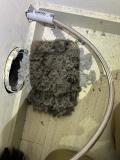
According to the U.S. Fire Administration, failure to clean is the leading factor behind clothes dryer fires in homes. Mint Air Duct Cleaning cleans the entire run, not only the lint trap: the trap housing, the transition hose, the concealed line and the exterior hood, using agitation tools and HEPA extraction so the lint leaves the house instead of the laundry room. The photo is from one of our own jobs: lint packed inside a vent line.
- Full vent line cleaning
- Exterior vent hood
- Lint & bird nest removal
- Airflow check
- Long or roof vents
- Homes & multi-unit buildings
Dryer Vent Installation
A dryer pushes hot, moist, lint-filled air. The vent has to carry all of it outside without giving lint a place to collect. That comes down to the material, the length of the run, the number of turns and the termination at the end. Standard vented dryers must exhaust outdoors, never into an attic, crawlspace or room; ventless condenser and heat pump dryers are the exception.
Mint Air Duct Cleaning installs vents in smooth rigid metal duct, keeps the route as short and straight as the building allows, joins sections so lint does not catch at the seams and finishes with an exterior hood that has a working flap. Plastic and foil accordion hoses are not used for the run itself: they crush easily and their ridges hold lint.
- New dryer vent lines
- Rerouted vents
- Rigid metal duct
- Exterior vent hoods
- Wall & roof terminations
- Sealed joints
Dryer Vent Repair
Most vent repairs come down to one damaged part: a hose crushed behind the dryer, a joint that pulled apart inside a wall, a hood whose flap no longer opens or a guard that was never fitted. Mint Air Duct Cleaning finds that part, fixes it and tests the line, rather than replacing a whole vent that only needs one repair.
It is better not to keep using a dryer with a broken vent. A vent that is crushed, disconnected or blocked cannot push exhaust outside: heat builds up in the dryer, lint and moisture spill into the room, and a gas dryer’s exhaust has nowhere safe to go. According to the U.S. Fire Administration, dryer vents can be blocked by lint, by the nests of birds and other animals or by damage to the vent itself, and a compromised vent can lead to overheating and fire.
- Crushed transition ducts
- Disconnected vents
- Broken vent hoods
- Damaged duct sections
- Bird guards
- Airflow test
What Our Customers Say
4.7 average from 28 Google reviews across our 8 Google Business listings (listed as JS AirDuct). Every review shown is a real Google review.
I recently booked a residential air duct cleaning service, and I couldn’t be happier. The technician showed up on time, explained everything clearly, and left my home spotless. My allergies have noticeably improved since the cleaning. Definitely worth every penny, such a great experience!
My clothes were taking forever to dry, and I had no idea it was from a clogged dryer vent. Thankfully, this company fixed it right away. Their technician cleaned everything thoroughly and made sure the airflow was perfect. I’m so impressed with their honesty and fast response!
I had mine when a dryer was cleaned. It was like scraping a big heap of lint, big enough to make a sweater. The dryer is a lot better now and that is hard to believe.
The laundry room kept smelling musty, so I booked dryer vent cleaning service, and the technician cleared all lint and checked for safety issues.
The upgrade of the indoor air quality was a valuable addition to our property. It was done very efficiently and successfully. Thanks. Satisfied customer here!
Our office AC smelled musty, so we called commercial air duct cleaning, and the team arrived on time and did a thorough job wow!
Why Homeowners Choose Mint Air Duct Cleaning
Homeowners and property managers choose Mint Air Duct Cleaning for inspection-based duct work, modern equipment and a clear price before anything starts. Our certified, licensed and insured technicians check the system from the supply vents to the air handler, then recommend cleaning, sealing, repair or replacement based on what the ducts actually need, not on a fixed package. Because duct work happens inside walls, ceilings and attics, we show you what we found and explain the work before and after the visit, with appointments 7 days a week.
Signs Your Air Ducts Need Attention
Ducts rarely fail all at once. They give small warnings first: dust that comes back the day after you clean, a stale smell when the system starts, or one room that is always too warm.
Dust Around Vents
Grey rings on ceiling and wall grilles mean dust is circulating through the ducts and settling at the openings.
Debris Puffing From Registers
Small particles blowing out when the system starts point to loose buildup inside the supply ducts.
Musty or Stale Odors
Smells that appear every time air moves suggest trapped debris, moisture or pest activity in the ductwork.
Weak or Uneven Airflow
Rooms that stay warmer or cooler than others often have leaking, crushed or disconnected duct runs.
Allergies Worse Indoors
Pollen, pet dander and dust that recirculate through dirty ducts keep irritants in the air you breathe.
Long Drying Times
Clothes that need a second cycle usually mean lint is blocking the dryer vent line.
Recent Renovation
Drywall and sanding dust drawn into returns during a remodel settles deep inside the ducts.
Pests or Droppings Near Vents
Nesting material or droppings around registers mean pests have reached the ductwork.
If you notice two or more of these, an inspection usually pays for itself, because it tells you whether you need cleaning, sealing or repair before you spend on anything.
Benefits of Professional Air Duct Cleaning
Professional air duct cleaning removes the buildup that was recirculating, clears the material behind start-up odors and pest debris, restores airflow at blocked registers and leaves a cleaner blower behind. We describe the results in terms of what comes out of the system. The U.S. EPA notes that duct cleaning has not been shown to prevent health problems, so we do not promise that it will. What a whole-system cleaning does give you is ducts free of the debris they were carrying and a clear picture of their condition.
Less Dust Recirculating
Buildup that was blowing out of the registers is removed at the source instead of settling back on furniture each day.
Fewer Start-Up Odors
The material that held musty, pet or smoke odors leaves the system with the debris pulled into the HEPA collector.
Pest Debris Removed
Droppings and nesting material are cleared from the runs we clean, along with the dust that collected around them.
Better Airflow at Blocked Registers
Runs choked with debris or matted hair carry air again, so rooms at the end of long runs get their share.
A Cleaner Blower
A clean blower wheel moves air without throwing dust back into freshly cleaned ducts each time the system starts.
A Clean Start After Renovation
Construction dust the system collected during the work is taken out once the trades have finished and left.
Problems Found Early
The inspection catches disconnected runs, crushed flex duct and leaking joints before they waste more conditioned air.
When Is Air Duct Cleaning Worth It?
Air duct cleaning is worth it when the system shows a clear reason: heavy dust or debris released from the registers, pests in the ductwork, construction dust after a remodel or odors that return every time air moves. The U.S. EPA does not treat duct cleaning as routine maintenance and notes it has never been shown to prevent health problems, but it does name the situations where cleaning is warranted. We use the same line at the inspection: clean when the system shows it, wait when it does not, and tell you which side your ducts are on.
Cleaning Is Worth It When
Buildup is heavy enough to circulate, or something has been living in or entering the system.
You Can Usually Wait When
The ducts carry only a light film of dust and the system is doing its job.
Types of Air Ducts We Clean, Repair and Install
The main types of air ducts in homes and commercial buildings are rectangular sheet metal, round spiral duct, insulated flex duct, duct board and fiberglass-lined metal duct. Each one collects dust, leaks and wears out differently, so the type of duct decides the cleaning tools, the sealing method and whether a damaged section is repaired or replaced. Our technicians identify the duct type during the inspection and match the work to it.
Rectangular galvanized sheet metal is the standard material for main trunks and for ducts that must fit tight ceilings and walls. Its weak points are the many seams and joints, which we fasten mechanically and seal with mastic or foil tape.
Round galvanized steel duct formed with a continuous lockseam, so a run has fewer joints and less friction than rectangular duct. It needs more clearance, so it suits exposed ceilings, open commercial spaces and long straight runs.
Flexible duct with its own insulation and outer jacket, common for branch runs in attics and crawl spaces. It works well only when pulled straight, strapped so it cannot sag and sealed to its collars; jackets crack with age and rodents chew through it.
Rigid insulated board formed into rectangular duct, so the insulation is the duct wall. It does not tolerate moisture or rough handling: older board crumbles at the edges and its tape lets go, so we tell you when a run should be replaced.
Sheet metal duct with an internal fiberglass liner that quiets airflow. Cleaning must not tear the liner, and according to the EPA no biocides are registered for use on fiberglass-lined duct or duct board, so sanitizing is limited on these runs.
Dusty Vents or a Slow Dryer? Book Your Service in Minutes
Call (855) 501-0191 or book online. We confirm your appointment window, 7 days a week.
Find Us on Google: Our New York Locations
Our 8 Google Business listings (listed as JS AirDuct) across the Bronx, Manhattan, Queens and Brooklyn. Every pin links to its Google Maps page with directions, hours and reviews.
Real Jobs, Real Buildup
Photos from our own Google Business Profiles: what we find inside dryer vents, blower housings and return vents before we clean them.


What Does Our Duct Service Process Look Like?
Contact and Quick Triage
Call or book online and tell us what you notice: dust around vents, weak airflow, odors, rooms that never reach temperature or a dryer that takes two cycles.
We ask a few questions so the right technician and equipment arrive.
On-Site Inspection
Your technician inspects accessible supply and return ducts, registers, grilles, connections and the air handler area, and looks for loose joints, crushed runs, debris, pests and moisture.
Upfront Price and Plan
We show you what we found, recommend cleaning, sealing, repair or replacement based on the condition of the ducts, and give you a clear price. Nothing starts until you approve it.
Protect Your Home
Floors and furniture near the work area are covered, registers are sealed off as needed and the equipment is set up so dust is pulled out of the system, not into your rooms.
Clean, Seal or Repair
We clean supply and return ducts with agitation tools and HEPA extraction, reconnect and seal loose joints, replace damaged sections or clear the full dryer vent line, as agreed.
Airflow and Connection Check
After the work we check airflow at the vents, the condition of accessible connections and the dryer vent exhaust, so you know the system is moving air the way it should.
Clean-Up
Covers come off, the work area is cleaned and registers and grilles go back in place. Debris removed from the system leaves with us.
Walkthrough and Next Steps
We walk you through what was done, share any issues we noticed, such as worn insulation or a damaged exterior hood, and explain what to keep an eye on.
Why Do Climate and Housing Make Duct Care Different?
Climate and housing decide how fast dust, debris and moisture build up inside air ducts. In New York, older apartment buildings, radiator-era homes and constant construction push fine dust into short duct runs and closet air handlers. In Southern California, wildfire ash, coastal marine moisture, desert dust and long cooling seasons load supply and return lines differently from one city to the next. These are the conditions our technicians see most often and plan each inspection around.
Air Duct Permits in New York and California
Routine duct and dryer vent cleaning usually needs no permit in either state. New ductwork, duct replacement and HVAC alterations are different: they are filed with the local building authority and must follow the state and city codes below. We tell you before any work whether a permit applies.
New York City: Department of Buildings (DOB NOW)
In the five boroughs, mechanical and HVAC work that needs approval is filed with the NYC Department of Buildings through its DOB NOW online system. Duct cleaning without changes to the system usually does not require a filing; new or replaced ductwork is reviewed under the city’s construction codes.
Westchester, Yonkers, Mount Vernon and New Rochelle
Outside New York City, permits are issued by each city, town or village building department under the New York State Uniform Fire Prevention and Building Code. Yonkers, Mount Vernon and New Rochelle each run their own building department and permit applications.
California: Mechanical Building Permits
New duct installations, full or partial duct replacements, and substantial HVAC modifications generally require mechanical permits. Minor maintenance and routine duct cleaning usually do not require permits unless the work involves regulated alterations. Requirements and exemptions vary by jurisdiction under the California Building Standards Code.
California: Title 24, Part 4 (California Mechanical Code)
Establishes mechanical installation requirements covering duct materials, construction, supports, clearances, ventilation, and applicable fire and smoke control provisions. The California Building Standards Commission provides access to the applicable mechanical codes.
California: Title 24, Part 6 (California Energy Code)
Establishes energy efficiency requirements for duct insulation, sealing, leakage, and applicable HVAC airflow performance. The 2025 Building Energy Efficiency Standards apply to permit applications submitted on or after January 1, 2026, with specific requirements for new installations and alterations to existing systems.
California: ECC Testing and Compliance Forms
New residential duct installations and qualifying HVAC alterations require field verification and diagnostic testing by certified Energy Code Compliance (ECC) raters when specified by the Energy Code. Applicable documentation includes the Certificate of Compliance (CF1R), Certificate of Installation (CF2R), and Certificate of Verification (CF3R). Testing and documentation requirements vary by project scope and applicable exemptions under the 2025 Energy Code Compliance Documentation and ECC Program.
What Affects the Price of Duct Work?
The price of air duct cleaning or repair depends on the size of the property, the number of supply and return vents, how easy the ducts are to reach and the condition the inspection finds. We quote after looking at the system rather than over the phone, because a crawl space, a finished ceiling or pest debris changes the time and materials a job needs. You receive an upfront price and approve it before any work begins, with no additional costs added at the end.
More rooms means more supply and return vents to clean or check.
Each register, grille and return adds work, so we count them during the inspection.
Attics, crawl spaces and finished ceilings take more setup than an open basement.
Heavy buildup, pests, moisture or damage can add repair or sealing to a cleaning visit.
How to Book Your Duct Service
Call (855) 501-0191 or send the form with your property type, the number of vents and what you are noticing. We review the details, confirm an appointment window and send a technician to inspect before any work begins.
Air Duct Service Areas in New York and California
Mint Air Duct Cleaning serves two regions: New York City and Westchester from our Bronx base, and five Southern California counties. Each state hub covers local permits, climate and housing; every city below has its own page.

The Bronx, Manhattan, Queens, Brooklyn, Staten Island and Westchester, with eight Google Business locations.

Los Angeles, Orange, Ventura, Santa Barbara and Riverside counties.
- Los Angeles
- Orange County
- Malibu
- Santa Monica
- Beverly Hills
- Pasadena
- Santa Ana
- Anaheim
- Irvine
- Huntington Beach
- Long Beach
- Torrance
- Culver City
- Sherman Oaks
- North Hollywood
- Playa Vista
- Topanga
- Santa Clarita
- Thousand Oaks
- Ventura
- Oxnard
- Santa Paula
- Mira Monte
- Goleta
- Summerland
- Brea
- Lake Forest
- Palm Springs
- Rancho Mirage
- Bermuda Dunes
Air Duct Cleaning Questions, Answered
What is air duct cleaning?
Air duct cleaning removes dust, debris and contaminants from the supply and return ducts, registers, grilles and accessible components of your heating and cooling system. Technicians loosen buildup with agitation tools and pull it out with HEPA vacuum extraction so it stops circulating through your rooms.
What are the warning signs my air ducts need cleaning?
Common signs are dust rings around vents, debris puffing out when the system starts, musty or stale odors, dust returning soon after cleaning the house, weak airflow from some registers, pest droppings near vents and recent renovation dust or wildfire ash.
Do you go in every room to clean the air ducts?
Yes. We clean every accessible supply and return vent in the home, not only the main trunk, and protect floors and furniture where we work. Your technician shows you the results before leaving.
What time of year should I clean my air ducts?
Any time works, but many homeowners book in spring before heavy cooling use or in fall before the heating season. Clean ducts after a renovation, after moving into a new home, or after nearby wildfire smoke, whatever the season.
Will my house be dusty after duct cleaning?
It should not be. Loosened dust is pulled out of the ducts with HEPA vacuum extraction equipment rather than blown into your rooms, and we protect floors and furniture and clean up the work area before we leave.
Is it okay to never clean air ducts?
Ducts are not self-cleaning. Dust, dander and debris keep building up, which can restrict airflow, cause odors and recirculate particles every time the system runs. A periodic inspection tells you whether cleaning is needed.
How much does air duct cleaning cost?
The price depends on the size of your home, the number of ducts and vents, and the layout of the system. We inspect first and give you an upfront price with no additional costs before any work starts.
How do I know if you serve my area?
See our service areas page for every neighborhood and city we cover, or call (855) 501-0191 with your ZIP code and we will confirm availability.
Duct Care Tips From Our Team

What to look for when you hire a residential air duct cleaning company, from equipment and process to clear pricing.

Why clean ducts before guests arrive, and how duct cleaning helps your home feel fresher during the holidays.

Household appliances that can create moisture and mold, and what that means for your air ducts.
Ready to Restore Clean Airflow? Book Your Duct Service With Mint Air Duct Cleaning Today
Certified, insured technicians, modern equipment and an upfront price before any work begins.
Call (855) 501-0191 or send the form and we confirm your appointment window. Appointments 7 days a week.
